



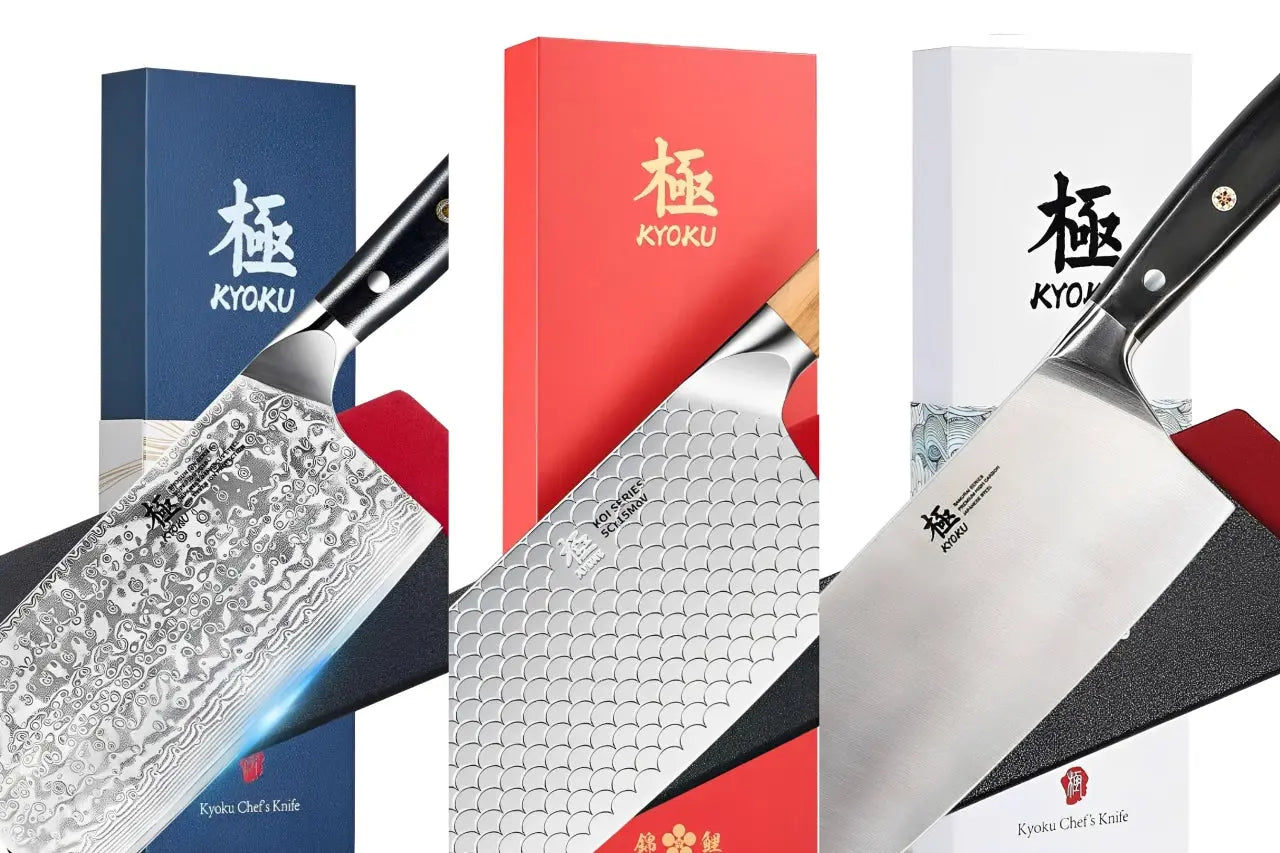
Many people assume that every cleaver knife is designed to chop through bones, but that is only part of the story. Some cleaver knives (meat cleavers) are primarily used for cutting through bones, but many other types of cleaver knives are not designed primarily for handling bones and meat.
This is why it is important to understand exactly what a cleaver knife is used for before buying one. Purchasing the wrong type of cleaver knife, under the wrongful assumption that they are all the same and serve the same purpose, will leave you with a knife that feels too heavy, too delicate, or simply unsuitable for the way you cook.

4 Different Types of Cleaver Knives and What They Are Used For
One of the biggest misconceptions about cleavers is that they all serve the same purpose. Actually, there are at least five different kinds of cleaver knives, which all vary in blade thickness, weight, edge geometry, and steel type.
The term "cleaver" covers several different types of knives, each of which is designed for specific kitchen tasks. Some cleavers are built to break down large cuts of meat and poultry, while others are precision tools used for slicing vegetables, mincing herbs, and preparing delicate ingredients.
So, because each type of cleaver is different, the best use of a cleaver knife depends on what type of cleaver it is.
1. Meat Cleavers
When most people think of a cleaver, they are picturing a traditional meat cleaver. The main feature of a meat cleaver is its thick, heavy, and durable blade, which makes it ideal for heavy-duty tasks like chopping through cartilage, ribs, and solid bones without dulling or chipping.
Key Uses of A Meat Cleaver
- Splitting poultry
- Breaking down large cuts of meat
- Cutting through joints
- Chopping small bones
- Portioning ribs
The reason meat cleavers work so well for these tasks is simple: they combine mass and durability. Unlike slicing knives, the weight of the blade does much of the work. All you have to do is generate force through downward chopping motions rather than relying solely on sharpness.
Buying a Meat Cleaver Knife
For most home cooks, a medium-weight meat cleaver is ideal. Look for a blade length of 6 to 8 inches, full tang construction, durable stainless or high-carbon steel, and a comfortable handle grip.
Kyoku's 7-inch cleaver knife is sharpened to an 8- to 12-degree edge using the traditional 3-step Honbazuke method to deliver precise cuts through chunks of meat, bone, and more with negligible resistance. The 7" VG-10 stainless steel blade’s 56-68 HRC strength provides unrivaled performance, superior corrosion resistance, and exceptional edge retention.
Its Japanese 67-layer Damascus VG-10 steel blade has been cryogenically treated and paired with a perfectly balanced handle, offering superior precision and control. This is one of Kyoku's bestsellers, and it is deliverable within 3-7 days of purchasing anywhere in the U.S.
2. Chinese Cleavers (Cai Dao/菜刀)
A Chinese cleaver may look similar to a meat cleaver, but it serves a very different purpose. It functions as an all-purpose chef's knife. You can use them for slicing proteins, dicing vegetables, and mincing herbs.
Best Uses of Chinese Cleaver Knife
- Slicing vegetables
- Mincing herbs
- Cutting boneless meats
- Crushing garlic
- Scooping ingredients from the cutting board
The main advantage of a Chinese cleaver knife is its flat surface. The massive flat surface allows you to easily scoop chopped ingredients off the board and into the pan. You can also use the flat side to smash garlic or ginger, and the back spine to crack open joints.
The large blade surface provides excellent knuckle clearance and allows the cook to transfer chopped ingredients directly into a pan or bowl.
What to Look for in a Home Kitchen Chinese Cleaver
Choose a Chinese cleaver if you perform a lot of vegetable preparation. Look for thin blade geometry, lightweight construction, a sharp edge profile, and a comfortable handle. But avoid using these knives on bones, as the thinner edge can chip.
3. Vegetable Cleavers
Vegetable cleavers are designed specifically for plant-based food preparation. These knives are often thinner and lighter than traditional meat cleavers, and they have a broad blade that creates excellent stability when making repetitive cuts and allows for efficient chopping motions. If vegetables make up the majority of your meal prep, a vegetable cleaver can become one of the most-used knives in your kitchen.
Best Uses for Vegetable Cleavers
- Chopping vegetables
- Dicing onions
- Shredding cabbage
- Slicing fruits
- Preparing herbs
Buying Tip For Meat Cleavers
When buying a vegetable cleaver, prioritize cutting performance over blade weight. Look for a vegetable cleaver with a thin cutting edge, excellent sharpness, a lightweight feel, and a comfortable grip.
Kyoku's 7-inch cleaver knife from the Koi series brings precision, beauty, and luck to your kitchen. The koi-scale-inspired blade is designed to minimize food sticking, while the razor-sharp V-grind edge, honed to 10-14 degrees, makes every cut clean and effortless.
Check out its full-tang olive wood handle; it is made to fit perfectly in your hand and provide sustained comfort even for long hours of prep. It is made from high-carbon stainless steel: it resists corrosion and thrives under pressure in even the busiest kitchens.
This knife comes in Kyoku's special gift package. You can gift it to a loved one, or keep it for yourself in your kitchen...or why not both?
4. Bone Cleavers
Bone cleavers are specialized tools designed specifically for cutting through large bones. They feature extremely thick blades and reinforced edges, and the blade sacrifices slicing performance in favor of impact resistance.
Best Uses of a Bone Cleaver
- Splitting beef bones
- Processing game meat
- Breaking down whole poultry
- Preparing stock bones
What to Look for in a Home Kitchen Bone Cleaver
Most home cooks do not need a dedicated bone cleaver. However, if you frequently process large cuts of meat, look for one with a very thick blade stock, heavy weight, durable steel, reinforced edge geometry, and strong handle construction. Keep in mind that a bone cleaver is highly specialized and generally unsuitable for everyday kitchen prep.
Cleaver Knife Types and Their Best Uses
| Cleaver Type | Best Used For | Not Ideal For |
| Meat Cleaver | Poultry, joints, ribs, portioning meat | Fine slicing and precision work |
| Chinese Cleaver (Cai Dao) | Vegetables, boneless meats, and herbs | Cutting through bones |
| Vegetable Cleaver | Fruits, vegetables, herbs | Heavy meat processing |
| Bone Cleaver | Large bones, game processing, stock bones | Everyday kitchen prep |
| Japanese Cleaver (Chukabocho) | Precision vegetable and meat preparation | Heavy bone chopping |
| Multi-Purpose Cleaver | General home cooking tasks | Specialized heavy-duty work |
How to Choose the Best Cleaver Knife for Your Kitchen
The best cleaver is not necessarily the most expensive or the sharpest. The best cleaver is the one that matches the way you cook.
- If you frequently process meat, a traditional meat cleaver makes the most sense. If you regularly buy whole chickens, racks of ribs, or larger cuts of meat, the additional weight and durability will be valuable.
- If you primarily prepare vegetables, a Chinese cleaver or vegetable cleaver is often the better choice. They provide larger cutting surfaces, excellent board contact, and are better for faster vegetable preparation. Many cooks discover they can replace several kitchen knives with a good vegetable cleaver.
- If you want one knife for most tasks, a Chinese cleaver is often the most versatile option. It can slice vegetables, mince herbs, cut boneless meats, crush garlic, and transfer ingredients. For many home cooks, it functions much like a chef's knife with additional advantages.
![]()
 Final Thoughts on Choosing the Best Cleaver Knives
Understanding the differences between meat cleavers, Chinese cleavers, vegetable cleavers, and bone cleavers is the key to choosing the right tool for your kitchen.
Before buying a cleaver, think carefully about the tasks you perform most often. The home cook who spends most of their time chopping vegetables will benefit from a very different cleaver than someone who regularly processes whole chickens or large cuts of meat. When matched to the right cooking style, a quality cleaver can quickly become one of the most useful and enjoyable knives in your kitchen.
You may also be interested in our complete guide on butcher vs. cleaver knives: where they differ and how to choose between them.

