



There are plenty of moments in the kitchen where you want tender steak slices that are even and easy to bite through: think stir-fries, cheesesteaks, fajitas, pho, or even a clean, elegant plating for a salad or sandwich. In these cases, thick chunks just don’t cut it (literally).
But here’s where a lot of people go wrong: they underestimate how much the knife and the technique matter. Use the wrong knife or slice the wrong way, and even a great cut of beef can turn chewy, ragged, or uneven. Get it right, and suddenly everything cooks better, eats better, and looks better.

How to Thinly Slice Steak (Step-by-Step)
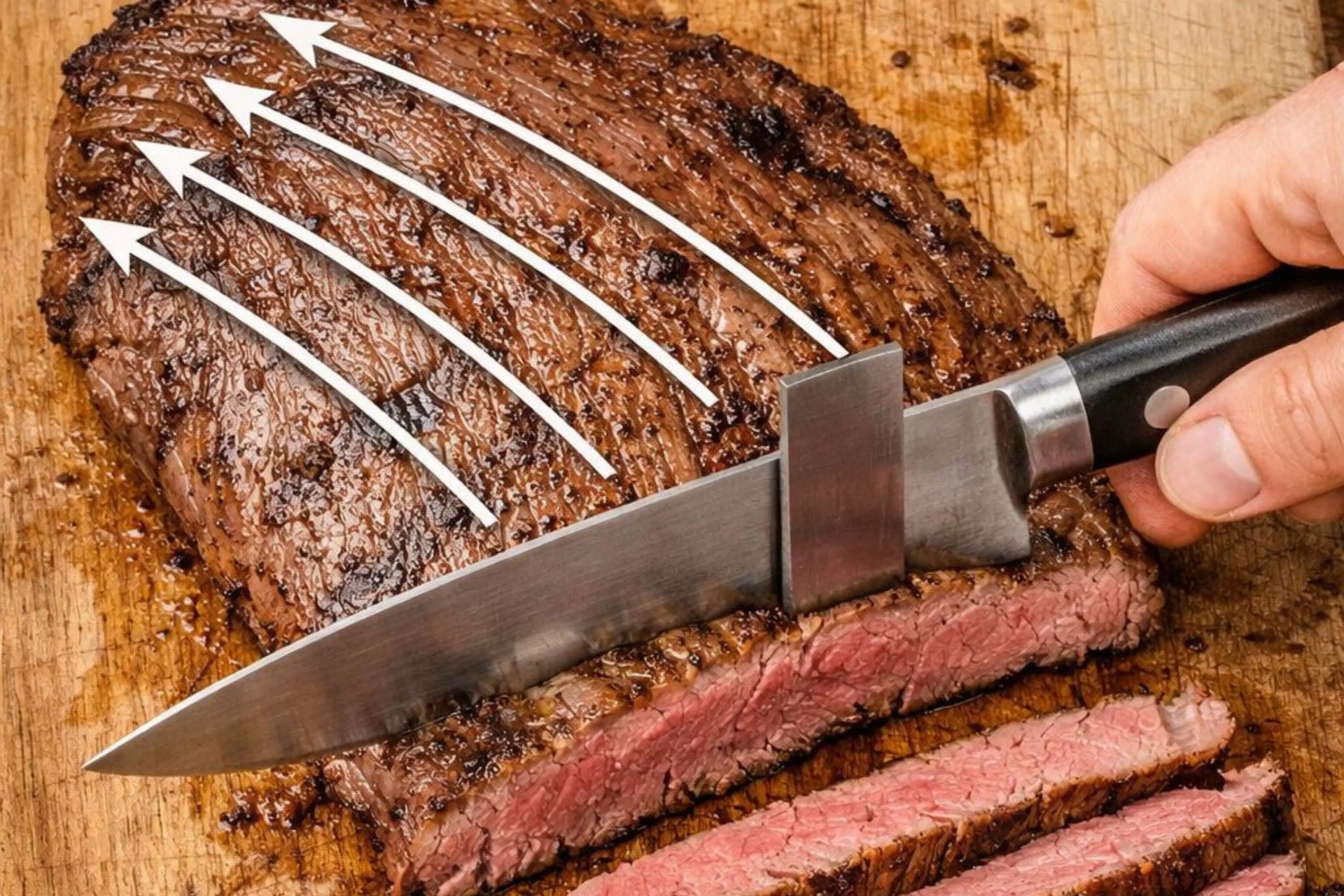
When slicing steak, your goal should be to get thin, even slices that stay tender and intact. That means cutting cleanly (not sawing or tearing), slicing against the grain, and keeping thickness consistent.
Step 1: Let the Steak Rest (If Cooked)
After cooking, let the steak rest for 5–10 minutes. Resting redistributes juices. If you slice too early, the juices run out, and the meat becomes dry and harder to slice cleanly.
Step 2: Chill Slightly (Optional but Powerful)
For raw or cooked steak, place it in the freezer for 15–30 minutes. Slightly firm meat is much easier to slice thinly. It holds its shape instead of squishing under the knife.
Step 3: Identify the Grain
Look for the direction the muscle fibers run (they look like lines across the meat). You want to slice against the grain, not with it. This shortens the muscle fibers and makes each bite more tender.
Step 4: Use the Right Knife
Use a sharp, long-bladed steak knife (more on this later). A sharp knife makes clean cuts. A dull one tears the meat and ruins your slices.
Step 5: Slice at a Slight Angle
Angle your knife slightly (about 30–45 degrees) and slice in smooth, single motions. Angled slicing gives you wider, thinner slices without hacking straight down.
Step 6: Keep Slices Consistent
Aim for uniform thickness, typically 1/8 inch or thinner, depending on the dish. Even slices cook evenly and look better on the plate.

Tips for Thinly Slicing Flank Steak
Flank steak is lean, fibrous, and very grain-heavy. The muscle fibers are long and obvious. When slicing thinly, your goal should be to break down those long fibers so the meat is tender, but not stringy.
- Always slice against the grain (this is critical for flank steak)
- Cut on a sharp angle to maximize tenderness
- Chill before slicing, the flank steak benefits a lot from firming up
- Keep slices very thin (thinner slices are more tender)
For flank steak, let it chill, find the grain, and slice thinly against it at an angle. Do this right, and even this tough cut becomes surprisingly tender.
Tips for Thinly Slicing Ribeye Steak
Ribeye is rich, marbled, and naturally tender thanks to its fat content. Preserve that tenderness while keeping slices clean and visually appealing. Use a sharp knife, slice gently against the grain, and let the fat work in your favor.
- Trim excess fat if needed for cleaner slices
- Slice against the grain, though it’s less critical than the flank
- Use smooth, gentle strokes (don’t press too hard)
- Don’t over-chill; too firm can make fat harder to slice cleanly.
Remember, you are enhancing tenderness, not fighting toughness.
 Tips for Thinly Slicing Sirloin Steak
Sirloin sits in the middle ground, leaner than ribeye but more tender than flank. When slicing thinly, your objective should be to maintain the tenderness while avoiding chewiness from tighter muscle sections.
- Identify multiple grain directions (sirloin can vary)
- Adjust your slicing direction as needed
- Keep slices thin but not paper-thin
- Use a steady, confident stroke
For sirloin, pay attention to the grain, adjust as needed, and slice evenly. Done right, it balances tenderness and structure perfectly.

Why Steak Knives and Slicing Knives are Best for Slicing Steak
For slicing steak, the best knives are steak knives and slicing knives. Steak knives and slicing knives work because they are designed differently from regular knives, and those differences in size and design make them better for slicing steak, especially when slicing thinly.
1. They Have the Most Suitable Edge Designs
First, it comes down to edge design. Most steak knives have a serrated edge, which allows them to grip and tear through the outer crust of the steak, especially useful if it’s been seared or grilled.
Slicing knives, on the other hand, usually have a long, thin, straight edge. This is ideal for making clean, even cuts through meat. Instead of sawing back and forth, you can use long, smooth strokes that preserve the texture of the steak and keep juices from leaking out unnecessarily.
2. They Have the Ideal Blade Length and Shape for Slicing Steak
Second, the length and shape of the steak and the slicing knife blades make them suitable for slicing. Steak knives are typically compact and easy to control at the table, while slicing knives are longer so you can cut through larger cuts of meat in a single motion. That reduces tearing and keeps each slice looking neat.
3. They Handle Meat Fibers Properly
Third, they’re built to handle meat fibers properly. Steak has muscle fibers that can be tough if not cut correctly. A sharp slicing knife lets you cut across the grain smoothly, making each bite more tender. A dull or inappropriate knife would crush or shred those fibers instead.
4. They Are Easy to Control and Maneuver.
Finally, it’s about effort and control. Both types of knives are designed to cut through meat with minimal pressure. That means:
- Less squeezing is required. You don't lose the juices
- The cuts are cleaner cuts, with better texture and presentation
- They are safer to use as there is less chance of slipping
In short, steak knives excel at cutting cooked steak on the plate, especially with a crust, while slicing knives are best for carving larger cuts before serving. Both are optimized to make cutting meat easier, cleaner, and more precise.
When you are slicing steak thinly, your knife does more than cut; it determines whether slices are clean or shredded, whether juices stay in or leak out, and how precise and consistent your cuts are.
Final Thoughts on Slicing Steak Thinly
Thinly slicing steak isn’t complicated, but it is precise. And once you get the feel for it, it becomes one of those skills that instantly upgrades your cooking.
The combination of proper technique, understanding the cut, and using the right knife is what separates rough, chewy slices from clean, tender, restaurant-quality results. Get those three right, and you’ll notice the difference every time you cook.
You may be interested in how to slice flank steak against the grain, and

