



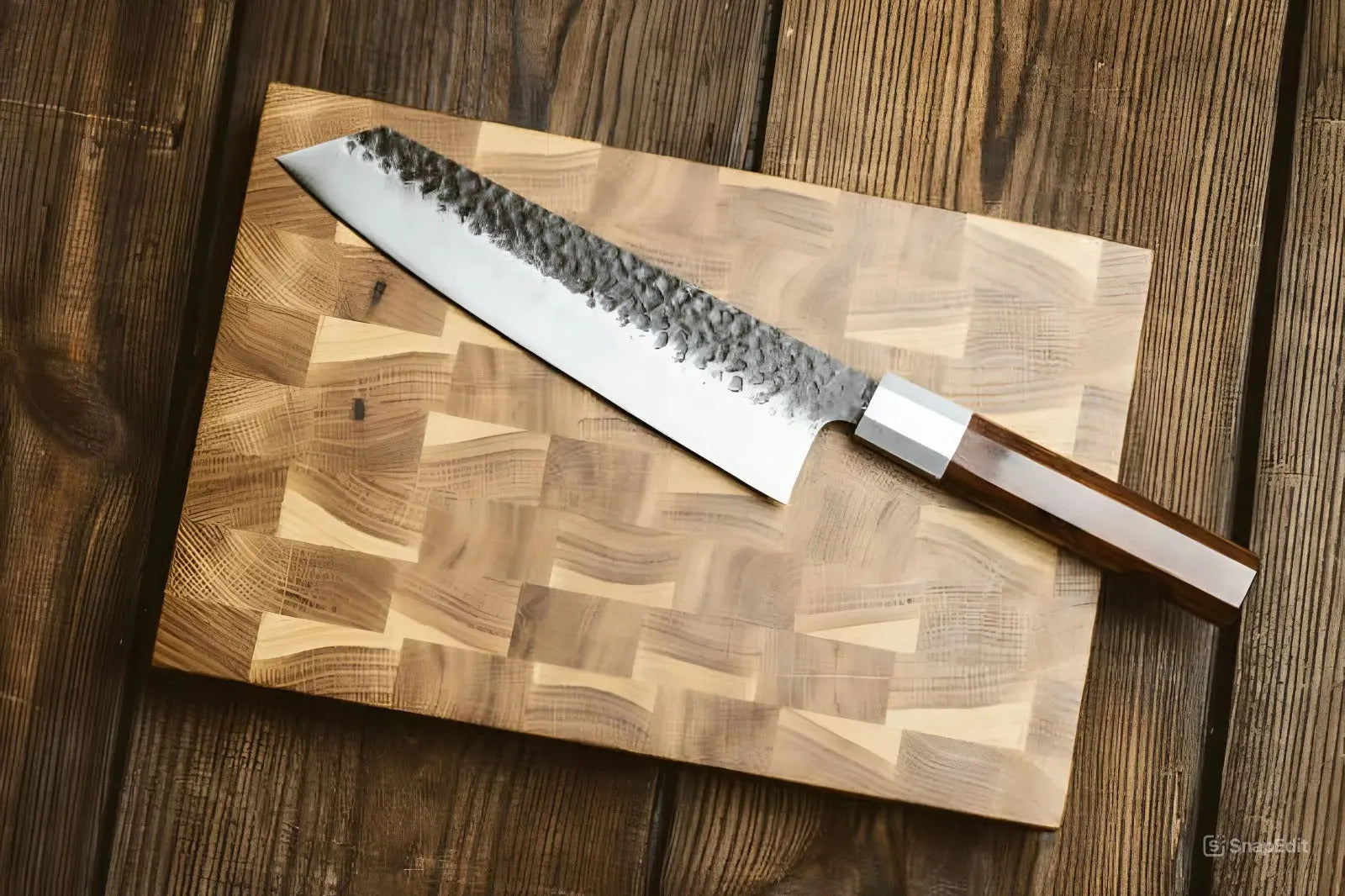
If you are passionate about cutting and cooking vegetables, it is likely that you have heard people around you discussing Usuba vs Nakiri knives. They’re both Japanese knives designed for vegetable prep, look nearly identical at first glance, and offer exceptional precision for clean, accurate cuts. But here’s the catch: they’re not made for the same type of cooking.
When it comes to Usuba vs Nakiri, the actual difference is not only the blade type but also how they should be used, who they are designed for, and the level of skill required. In this guide, you’ll learn everything simply and easily to help you make a wiser decision about whether a Usuba knife or a Nakiri knife is best for your kitchen.

Usuba Knives: What They Are, How They’re Used, and Who Should Buy One
The Usuba is a traditional Japanese knife style for the professional vegetable specialist. It’s most often found in the hands of trained chefs working in Japanese kitchens. Usuba knives generally have the following standout features:
- A single-bevel blade (sharpened on one side only)
- An ultra-thin, flat cutting edge
- A tall blade for knuckle clearance
-
Very sharp and precise
Best Uses of a Usuba Knife
The single-bevel of a Usuba knife is designed for insanely clean, controlled cuts, ideal for techniques like katsuramuki (rotary peeling). In the kitchen, a usuba knife is mainly used for:
- Precision vegetable slicing
- Decorative cuts for Japanese cuisine
- Paper-thin vegetable sheets
- Professional plating work
If you have a background as a chef or you just like to put time and effort into learning how to do the traditional knife slicing techniques, you might actually lean towards picking a Usuba over a nakiri knife.
 Nakiri Knives: Key Features, Best Uses, and Who They’re For
The Japanese Nakiri knife features a double-bevel blade with a flat edge for full contact with the cutting board and a rectangular blade shape. It is lightweight and easy to control, and is made to enable clean, uniform vegetable slicing. In the kitchen, a Nakiri knife is best used for:
- Chopping vegetables fast and efficiently
- Push-cutting and straight down chopping
- Everyday home cooking
Who the Nakiri Is For
If you cook at home, love veggies, and want a knife that’s both easy to handle and highly effective, the Nakiri knife vs Usuba debate almost always ends in Nakiri’s favor.
Usuba vs Nakiri Knives: Key Differences
|
Feature |
Usuba Knife |
Nakiri Knife |
|
Bevel |
Single-bevel |
Double-bevel |
|
Skill Level |
Advanced |
Beginner to Intermediate |
|
Best For |
Professional chefs |
Home cooks |
|
Ease of Use |
Challenging |
Very easy |
|
Maintenance |
High |
Low |
|
Cutting Style |
Precision slicing |
Fast chopping |
Usuba or Nakiri: Choosing Based on Your Needs
When to Choose Usuba over Nakiri
In the Usuba vs Nakiri debate, Usuba wins when technique and tradition are the priority. Choose a Usuba if:
- You’re trained in Japanese knife techniques
- You enjoy mastering complex skills
- Precision matters more than speed
- You’re cooking traditional Japanese dishes
When to Choose Nakiri over Usuba
For most people, Nakiri is simply the smarter, more enjoyable choice. In fact, the majority of home cooks feel more comfortable with Nakiri when they discuss the differences between Nakiri and Usuba.
Choose a Nakiri if:
- You’re a home cook
- You want clean, fast vegetable prep
- You don’t want a learning curve
- You prefer low maintenance

Kyoku Nakiri Knives: Perfect for Home Cooks
Kyoku Nakiri knives are ideal for people who want the performance of Japanese blades but at a more affordable price point. Kyoku has solid, reliable options whether you're upgrading from a traditional chef knife or developing a veggie-focused knife setup.
The widely beloved Kyoku Shogun Gin 7” Nakiri Knife will make your experience even more classic. This 7-inch blade delivers razor-sharp performance with Japanese stainless steel and a fine 13–15° edge for smooth, precise cutting.
Its durable 440C steel and balanced rosewood handle offer comfort, control, and long-lasting sharpness, finished with a protective sheath for safe storage.
Conclusion: Usuba vs Nakiri
The fact of the matter is that in the Usuba vs Nakiri debate, it’s not about which knife is “better,” but it’s about what you want.
If tradition, precision, and hard work appeal to you, Usuba is a great choice. But if it’s the most convenient, strong, and ideal vegetable-centric everyday cooking knife that you want, Nakiri wins for most kitchens.
You may be interested in some of the best uses of a Nakiri knife and other knife comparisons from Kyoku.

