



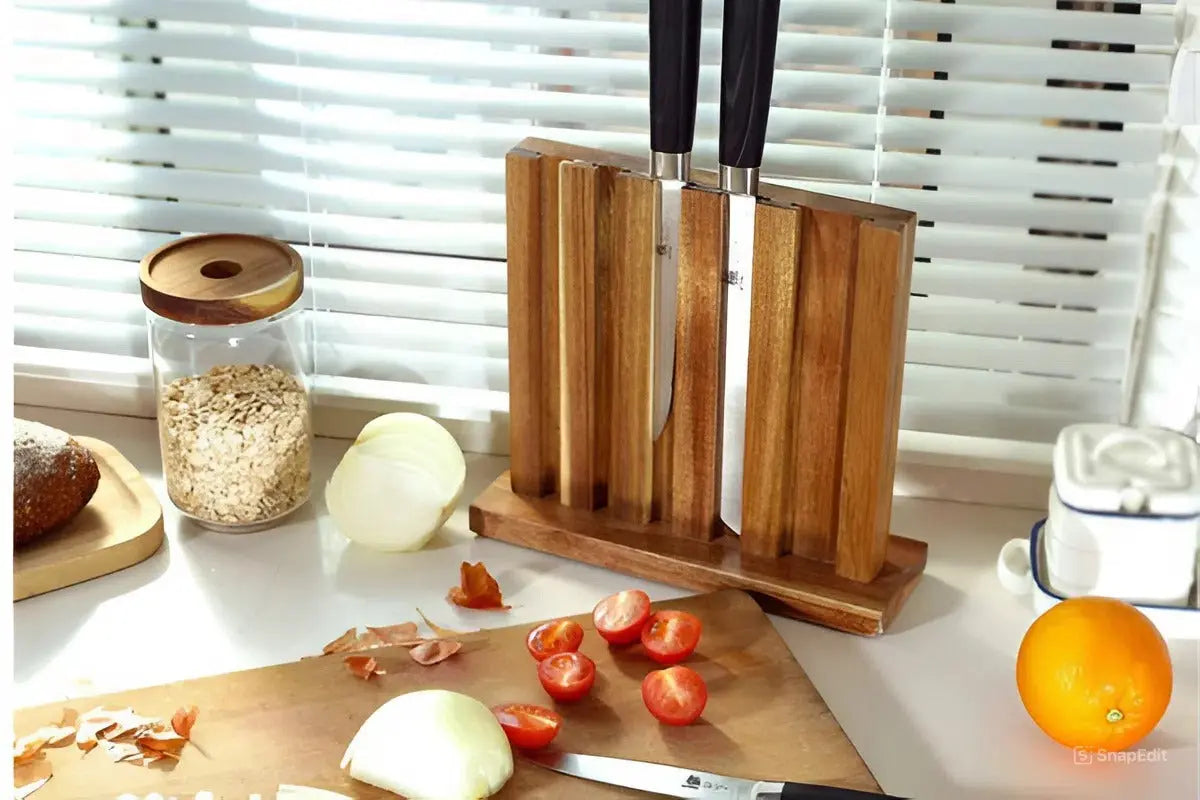
When it comes to positioning a knife block in the kitchen, the ideal location may vary from person to person, depending on their cooking habits and preferences, and even the kind of kitchen knives they are working with.
However, the best places to put a knife block are usually next to your main cutting board, against a backsplash corner, or beside the stove. Depending on the structure of your kitchen and personal preferences, you can also put a knife block on a dedicated counter section or on an open shelf.
Understanding the benefits and implications of putting your knife block in each of these areas will help you find the ideal solution for your kitchen and locate the ideal spot for your knife block.

5 Best Places to Put a Knife Block in the Kitchen
1. Next to Your Primary Prep Area
If you only choose one rule, make it this: your knife block should live near your main cutting board. This keeps your most-used knives within arm’s reach and prevents constant back-and-forth during prep, and is especially helpful if you are using a versatile blade like a chef’s knife, which handles most chopping, slicing, and protein prep.
For most home cooks, next to a chopping board/cooking area is the most practical and efficient place to keep a knife block because:
- It improves workflow
- It ensures the essential knives are kept close and immediately accessible
- It speeds up daily meal prep
If you are unsure of where to put your knife block, consider the area close to your chopping board. This is the optimal place for many home chefs, and should be a good default until you find one that is more suitable for you and your kitchen.
2. Against a Backsplash Corner
If counter space is limited in your kitchen, the best location to put your kitchen knife in the kitchen is against a backsplash corner.
Placing your block in a backsplash corner works because it keeps knives secure without interfering with your main prep zone. This is ideal for a knife block, especially one containing smaller, frequently used knives like a paring knife, which you may grab quickly for peeling fruit or trimming vegetables.
Why it works:
- Uses otherwise unused counter space
- Keeps sharp blades out of high-traffic areas
- Maintains a clean, uncluttered look
Kitchen corners are often wasted space, and that makes them perfect for a knife block.

3. Beside the Stove (With Safe Distance)
For some home cooks, putting their knife blocks close to the stove is an ideal option. This works especially for cooks who might want to make some quick cuts during cooking, and so need their knives to be near at hand. You can consider putting your knife block beside the stove, which brings the following advantages:
- It keeps the knives accessible while cooking
- It reduces unnecessary movement
- It supports multitasking
A versatile Santoku knife fits this role well, since it’s commonly used for quick vegetable prep or slicing cooked proteins mid-recipe.
Take note, however, that for this method to work, the knife block has to be kept far enough away from heat, steam, and splatter. Never place the knife block directly next to burners or where steam regularly hits it. Safety and blade longevity come first.
4. On a Dedicated Counter Section
If your kitchen allows it, dedicating a small area for your knife block can be an effective option that dramatically improves organization.
Keeping your knife block in a designated “tool zone” helps maintain consistency; everything stays visible, organized, and easy to grab. This works particularly well if you’re storing a full knife set.
Putting your knives in a dedicated counter section is a great idea because:
- It prevents counter clutter
- It keeps the knives visible and easy to identify
- It improves overall kitchen flow
This setup is ideal if your kitchen is larger, and organization matters more than saving space.
5. Inside an Open Shelf or Counter Nook
Another great option for placing your knife block is within an open shelf or counter nook. Open shelves or built-in counter nooks work great for knife blocks because they offer a balance between accessibility and protection.
This setup keeps knives slightly recessed, reducing accidental contact, while still allowing quick access. It also works well if you want your knives to contribute to the kitchen’s visual appeal without being in the way.
Why it works:
- Adds visual interest
- Reduces accidental contact
- Supports a clean, minimalist layout
This option is best for kitchens that prioritize both function and aesthetics.

Where Not to Put a Knife Block in the Kitchen
Knowing where to place a knife block also means knowing where to avoid.
- Near the sink: Moisture can damage handles and blades over time
- On high shelves: Reaching for sharp knives increases accident risk
- In high-traffic areas: Knife access should never interrupt movement
Avoiding these spots reduces risk and encourages safer kitchen habits.
Why a 6-Layer Natural Knife Block Is Ideal for Knife Storage
When it comes to knife blocks, placement matters, but the knife block itself matters just as much. A 6-layer natural knife block offers better stability, durability, and blade protection than lightweight alternatives. It’s designed to support daily use without tipping or wearing down your knives.
Key benefits:
- Strong layered construction for added stability
- Natural materials that fit modern and classic kitchens
- Blade-friendly slots that protect edges
- Balanced weight to prevent tipping
A solid block makes good placement safer and more effective.
Tips for Choosing the Right Knife Block
Before settling on placement, make sure the block itself fits your kitchen and knives.
- Measure your available counter space
- Choose slot sizes that fit your most-used knives
- Prioritize stability over looks alone
- Pick materials that are easy to clean and maintain
The right knife block supports both safety and workflow, not just storage.
Final Thoughts on Putting Your Knife Block in a Kitchen
Where you put your knife block has a bigger impact than most people realize. Proper placement keeps your knives accessible, protects the blades, and reduces the chance of accidents, all while making cooking feel smoother and more efficient.
Pair smart placement with a well-built knife block and quality knives, and daily prep becomes faster, safer, and more enjoyable.
All in all, the most important thing to remember when deciding where to put your knife block in the kitchen is that it should be positioned in a location that supports natural movement, safety, and consistency during food prep.
Consider our complete guide on how to choose the best knife block for your kitchen.

